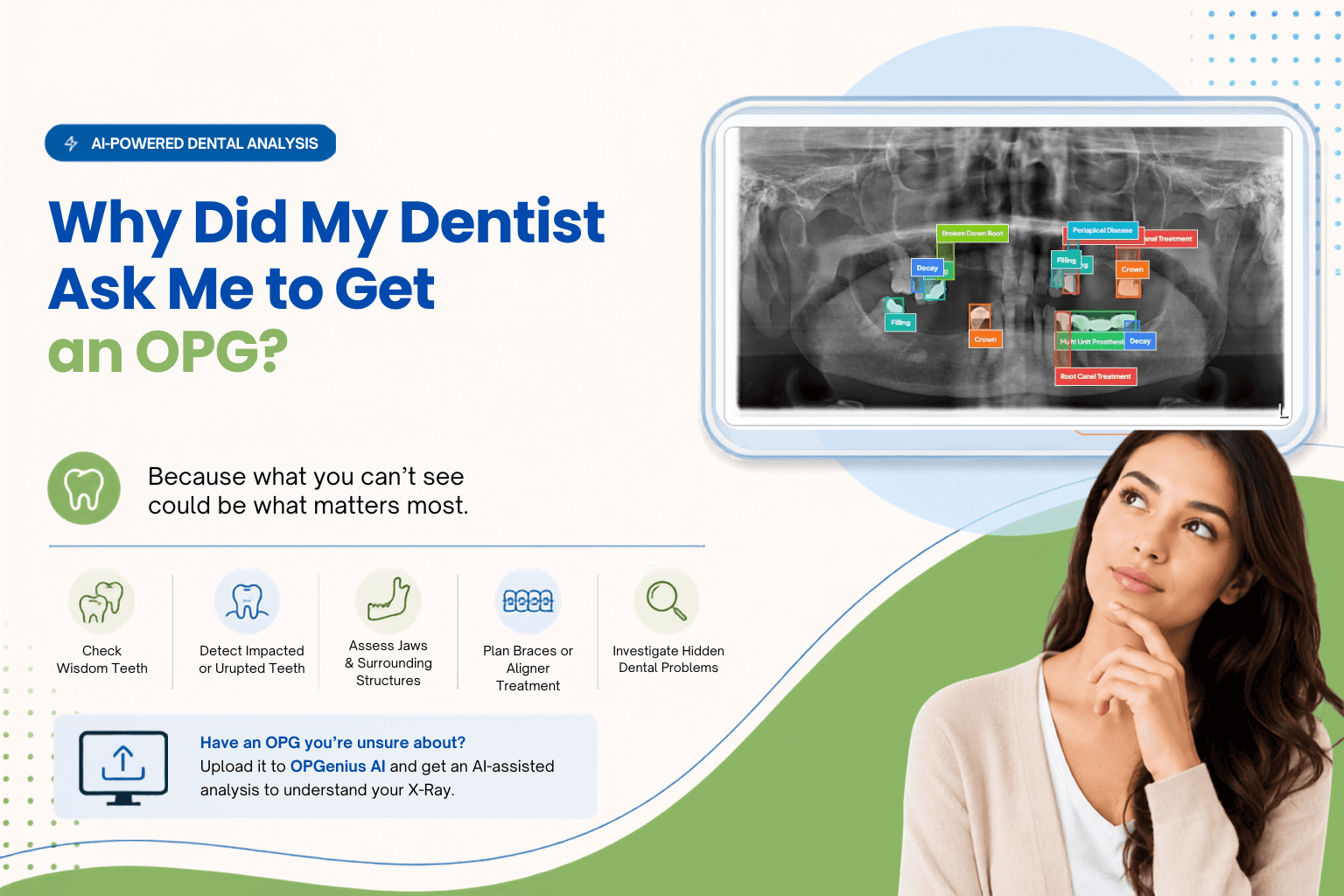
Why Did My Dentist Ask Me to Get an OPG? Reasons You Should Know!
Wondering why your dentist asked you to get an OPG? Discover common reasons dentists recommend panoramic dental X-rays, from wisdom teeth and braces planning to dental implants and jaw assessment.
Why Did My Dentist Ask Me to Get an OPG?
“But my tooth doesn't even hurt. Why do I need an X-ray?”
If your dentist has recently recommended an OPG, also called a panoramic dental X-ray, you may have wondered exactly the same thing.
You might even be thinking:
“Can't the dentist just look at my teeth?”
Sometimes, a visual examination is enough. But there are many things happening below the gumline and inside the jaw that a dentist simply cannot see by looking at your mouth.
That's where an OPG can help.
An OPG creates a broad, panoramic image of your teeth, jaws and surrounding structures, giving your dentist information that may not be visible during a routine examination.
So, why might your dentist ask for one?
1. Your dentist wants to check your wisdom teeth
This is one of the most common reasons for an OPG.
Wisdom teeth can sometimes grow normally.
Other times, they become:
- Impacted
- Angled toward another tooth
- Partially erupted
- Trapped underneath the gum
- Associated with infection or other problems
And here's the tricky part:
An impacted wisdom tooth may not hurt at all.
You could have a wisdom tooth sitting at an unusual angle without knowing it.
An OPG allows your dentist to see where the wisdom teeth are positioned and assess their relationship with the surrounding teeth and jaw structures.
So, if your dentist recommends an OPG before discussing your wisdom teeth, don't panic.
2. You may have a tooth that hasn't erupted properly
Have you ever wondered why a particular tooth hasn't come through?
An OPG can help your dentist identify impacted or unerupted teeth and understand their position within the jaw.
This can be particularly useful when assessing:
- Children and adolescents with developing teeth
- Delayed eruption
- Crowded teeth
Sometimes the problem isn't with the tooth you can see.
It's with the tooth you can't see yet.
3. Your dentist needs to look at your jaw and surrounding structures
An OPG doesn't just show individual teeth.
It provides a broad view of the jaws and surrounding structures.
This can help dentists assess areas that aren't easily examined during a routine oral examination.
For example, your dentist may want to investigate a concern involving the jaw or look for changes that require further assessment.
And sometimes an OPG is recommended because your dentist wants an overall view of your teeth and jaws as part of a broader assessment.
This may be particularly useful when there are multiple dental concerns or when a panoramic overview can provide information that individual intraoral X-rays cannot.
4. You're having braces or clear aligner treatment
Planning orthodontic treatment isn't simply about looking at whether your teeth appear crooked.
Your dentist or orthodontist may need to understand:
- Where the teeth are positioned
- Whether there are impacted teeth
- The condition and position of developing teeth
- The overall relationship of the teeth and jaws
An OPG can therefore be one part of the information used when planning orthodontic treatment.
So, if you're thinking about braces or clear aligners, don't be surprised if your dentist recommends an X-ray before treatment begins.
5. Your dentist wants more information about a dental problem
Sometimes your dentist simply needs to investigate something they cannot fully understand from the clinical examination alone.
An OPG may help provide additional information when there are concerns involving:
- Unusual tooth development
- Missing teeth
- Impacted teeth
- Jaw-related findings
- Certain areas of infection or pathology
It can also help your dentist decide whether more specific dental imaging is needed.
And that's important:
An OPG isn't always the final answer.
Sometimes it simply helps your dentist decide what to investigate next.
What you can see isn't always the whole story.
A tooth can look perfectly normal from the outside while there may be something happening beneath the gumline or within the jaw.
That's why dentists sometimes need imaging in addition to a clinical examination.
It's not about taking an X-ray just because.
It's about getting information that can help answer a specific clinical question.
What happens during an OPG?
If you've never had one before, don't worry.
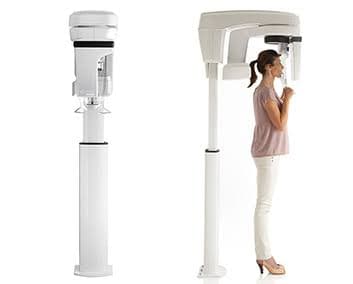
An OPG is generally a quick and non-invasive imaging procedure.
You'll usually be positioned at the machine and asked to keep your head still while the X-ray equipment rotates around your head to capture the panoramic image.
You don't need to worry about needles or injections.
The procedure itself is brief, although the exact time can vary depending on the equipment and the patient.
Got an OPG but don't know what it shows?
Don't rely on Google to find an OPG that looks like yours and try to figure it out yourself.
Upload your OPG to OPGenius AI and get an AI-assisted analysis that can help you understand the dental findings visible on your panoramic X-ray.
It can help you identify findings such as decay, fillings, implants, root canal-treated teeth, and more.
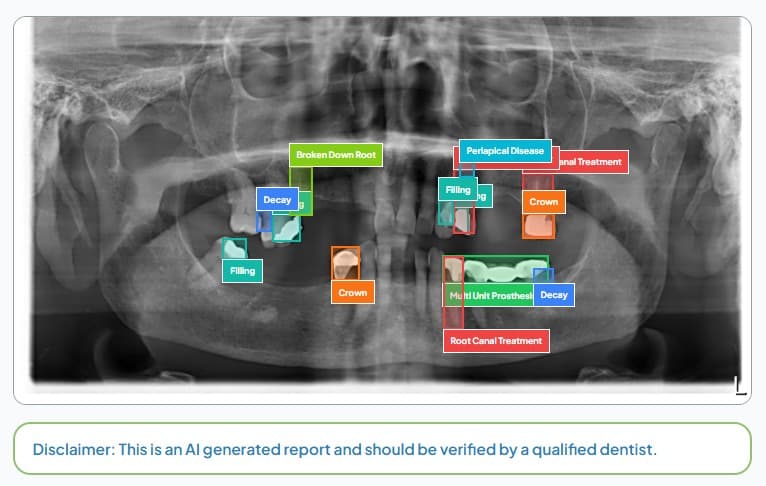
Think of it as a starting point to better understand your X-ray, not a replacement for your dentist's diagnosis.
Have an OPG you're unsure about? Upload it to OPGenius AI and understand what your X-ray may be telling you.
Want to see AI-powered dental analysis in action?
Try a Free OPG Scan