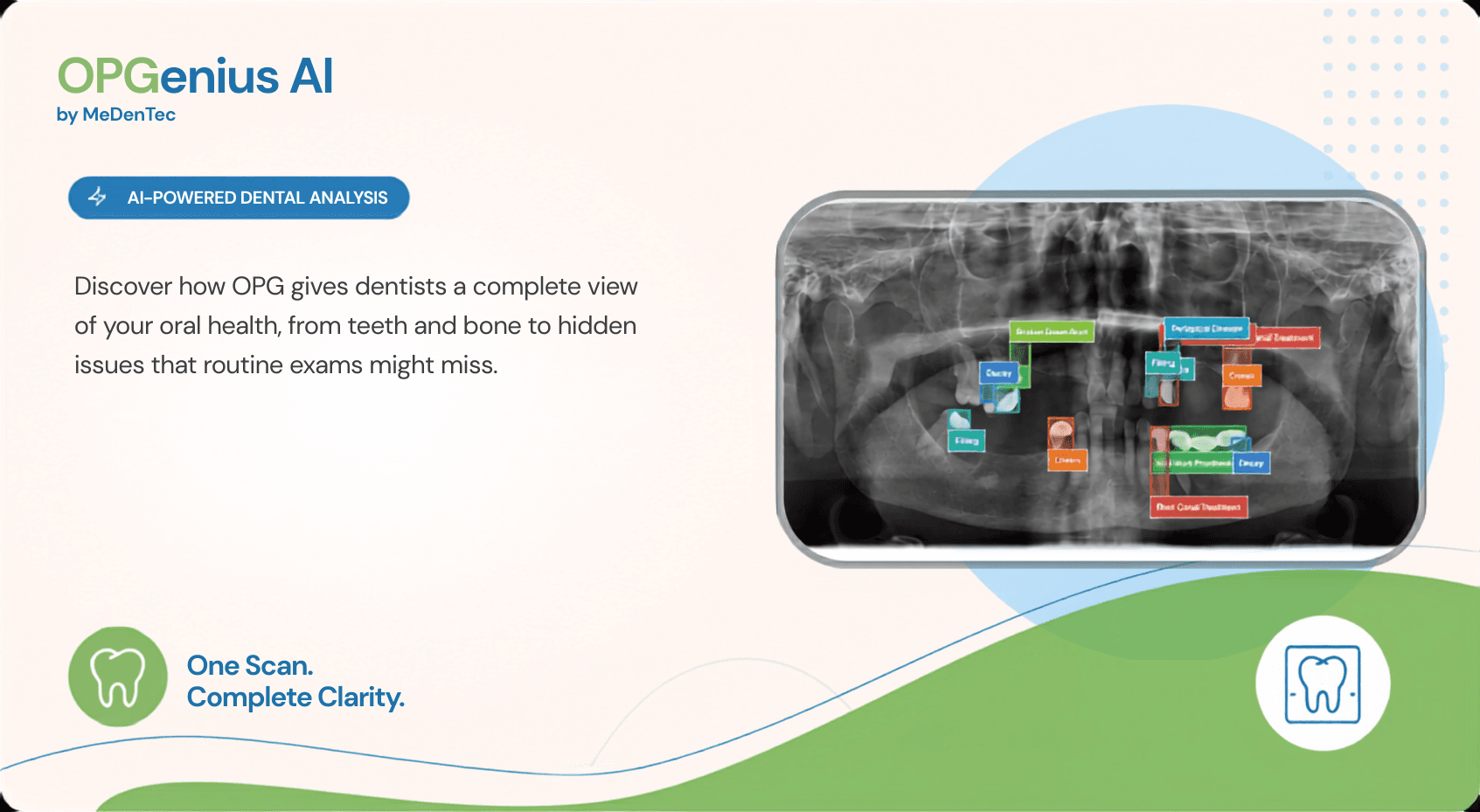
The Dental X-Ray That Sees It All
Discover why an OPG is one of the most valuable dental X-rays. Learn how panoramic imaging helps dentists detect hidden oral health problems and how AI-powered platforms like OPGenius AI are transforming dental diagnosis and treatment planning.
When you visit a dentist, you may be asked to undergo an OPG before treatment. To many patients, it looks like just another dental X-ray. However, an OPG is one of the most powerful diagnostic tools in modern dentistry.
In a single image, it provides a comprehensive view of the entire mouth, helping dentists detect problems that may not be visible during a routine clinical examination.
What does OPG stand for?
OPG stands for Orthopantomogram.
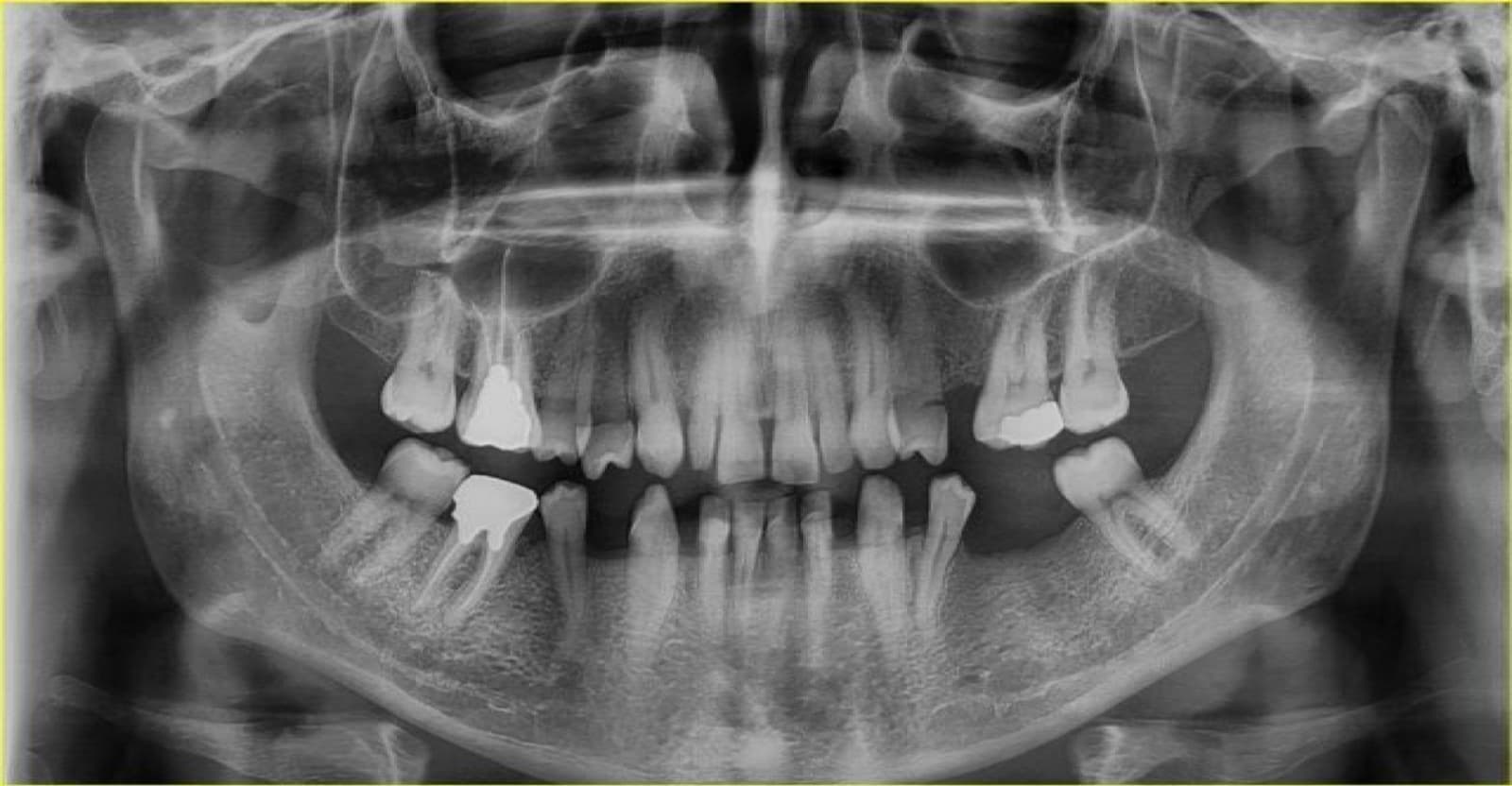
It is a special type of panoramic dental X-ray that captures the upper jaw, lower jaw, teeth, temporomandibular joints (TMJ), and surrounding structures in one image.
Unlike traditional dental X-rays, which focus on only a few teeth at a time, an OPG provides a "bird's-eye view" of the entire oral cavity.
Think of it as the difference between looking at a single house and viewing an entire neighborhood.
How is an OPG taken?
The procedure is quick, painless, and non-invasive.
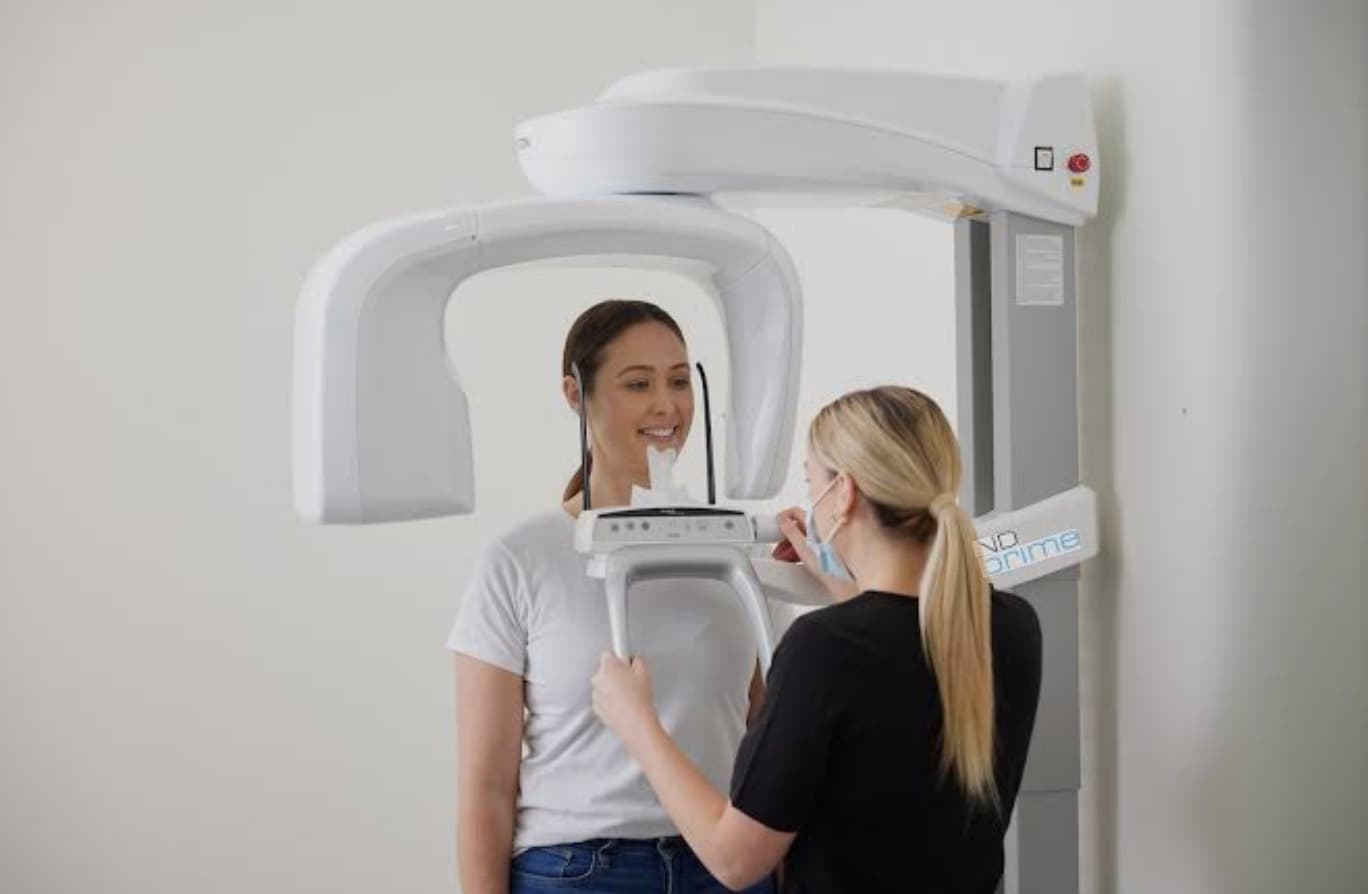
During the scan, the patient stands or sits still while a machine rotates around the head. As it moves, it captures multiple images that are combined to create a single panoramic radiograph.
The entire process usually takes less than a minute.
No injections, drilling, or special preparation are required.
What can dentists see on an OPG?
An OPG reveals much more than just teeth.
It allows dentists to examine:
1. Missing, impacted, or unerupted teeth
2. Wisdom teeth and their position
3. Dental caries and large restorations
4. Bone loss associated with periodontal disease
5. Jaw fractures and trauma
6. Periapical infections
7. Dental implants
8. Cysts and tumors
9. TMJ abnormalities
Because it provides such a broad view, an OPG is often the first imaging investigation performed during comprehensive dental assessments.
Why are OPGs important?
Many dental conditions develop silently.
A patient may have an impacted wisdom tooth, bone loss, or an infection without experiencing any symptoms. An OPG helps dentists identify these problems early, often before they become painful or require extensive treatment.
By providing a complete overview of the mouth, OPGs assist in diagnosis, treatment planning, and monitoring long-term oral health.
OPGs and Artificial Intelligence (AI)
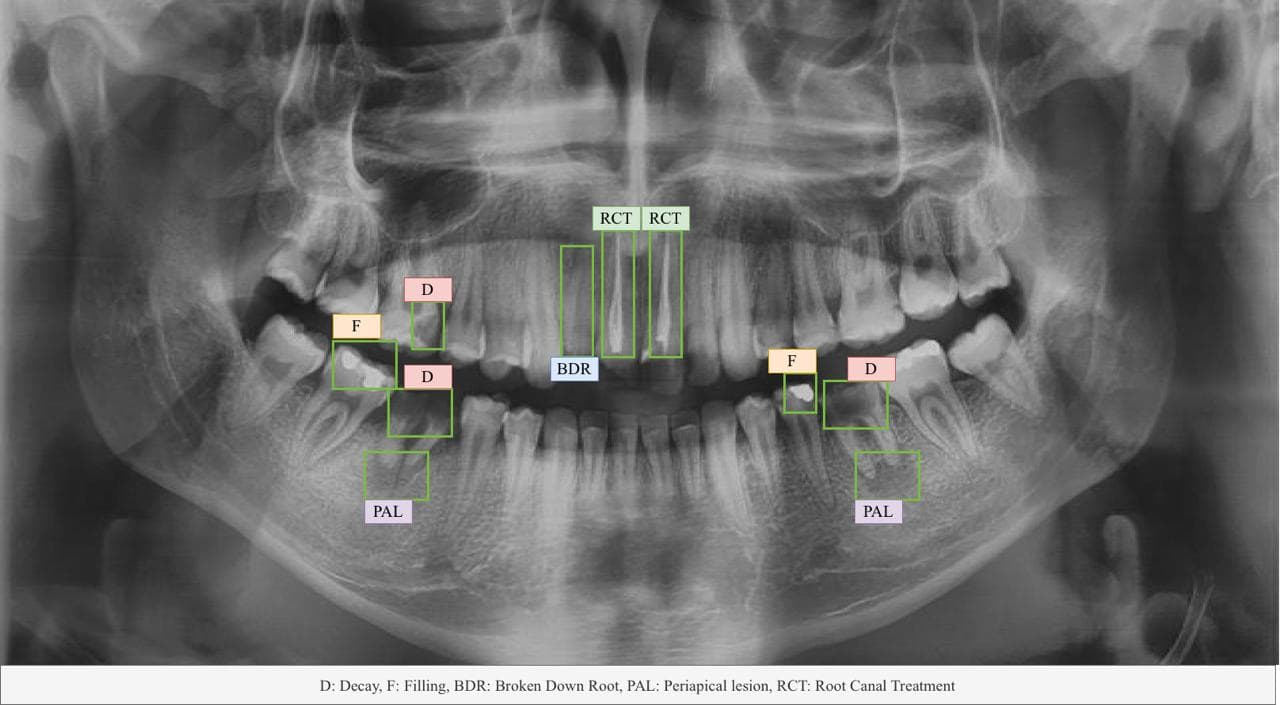
In recent years, OPGs have become one of the most widely used imaging modalities for developing dental AI systems. Researchers use thousands of annotated OPGs to train AI models to detect dental conditions such as caries, periodontal bone loss, impacted teeth, periapical lesions, and missing teeth.
Just as dentists learn to recognize patterns on radiographs through experience, AI models learn from annotated examples. The quality of these annotations plays a crucial role in determining how accurately AI systems can interpret new images.
The future of OPG analysis
As AI continues to evolve, OPG analysis is becoming faster and more efficient.
AI-powered systems such as OPGenius AI, Overjet and Diagnocat, are being developed to automatically identify teeth, detect abnormalities, and assist clinicians in diagnosis and treatment planning.
While these systems do not replace dentists, they can serve as valuable tools that enhance efficiency, improve consistency, and support clinical decision-making.
About the Author
Dr. Ayesha Nooruddin is a researcher, writer, and an AI advocate who firmly believes that the future of healthcare involves fewer clipboards and a lot more Artificial Intelligence. As part of the MeDenTec team, she plays a key role in developing AI-based solutions for dental diagnostics.
Want to see AI-powered dental analysis in action?
Try a Free OPG Scan